Mission
Millions of people are now taking revolutionary weight loss medications. Clinical support for them is thin. Many see a prescriber only occasionally and are left to manage side effects, nutrition and changing habits on their own.
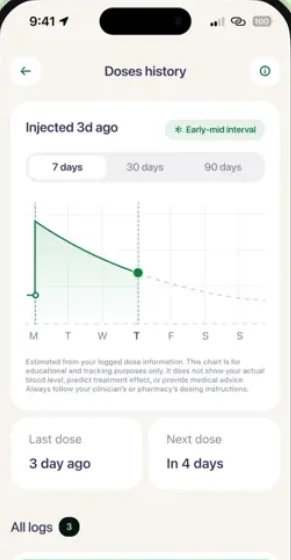
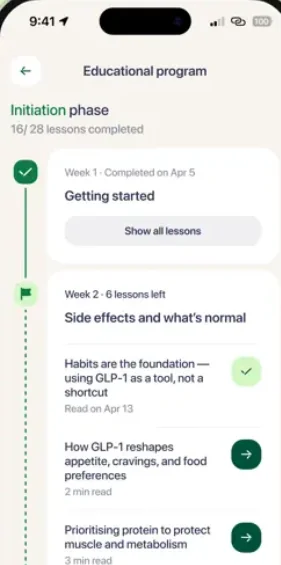
Kova is there for the weeks in between. It guides people through their treatment and the behaviour change that goes with it. Just as important, it helps them build a life that doesn’t depend on medication forever.
Context
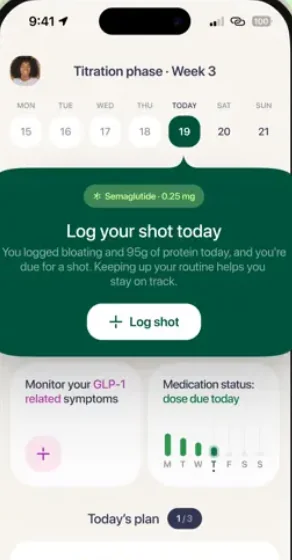
Most recently I led the launch of Kova, a companion app for people taking GLP-1 medications.
What the real problem was
The opportunity is not subtle. Millions of people worldwide are starting these medications, yet a large share stop within the first year. Almost none of the support around medicated weight loss deals with what actually makes people stop. Side effects catch them unprepared. Their nutrition has to change as their appetite falls. There’s a gap between a prescription and daily life.
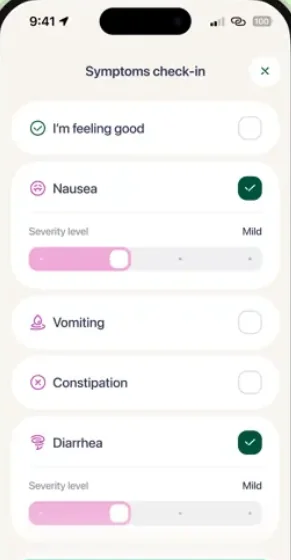
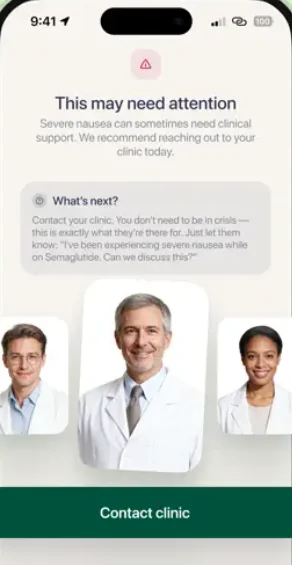
Customers told us about two main worries. The first was whether starting a GLP-1 was the right decision. The second was whether they were following their treatment correctly while managing side effects. So we built symptom check-ins that end with clear guidance on what to do next. People completed hundreds of them in the first weeks.
The decisions worth reading are the exclusions
The first version deliberately left out several obvious features. I wanted to prove one thing first: that support between doctor visits helped people stay on treatment and that customers valued it highly. For me it’s the clearest example of product judgement in a zero-to-one launch. It brought together tight MVP scoping, rapid prototyping and an AI-native delivery pipeline. The focus paid off early: 90% of new users activated in their first week.
What happened
We went from concept to a production MVP in three months. An AI-first pipeline covered design, prototyping, user testing, infrastructure and production code. That speed let the business test and scale its unit economics in a new market. The outcome that matters is people staying on treatment. It’s too early to measure that yet. The early signal is engagement: in the first few weeks, weekly active users more than doubled week on week.
What I would do differently
We deliberately left out several obvious features to prove one thing first. With hindsight, I’d set up measurement of treatment persistence from day one. The early engagement signals could then be linked to the outcome that matters sooner.